Mulch calculator for Kansas
Plan each garden bed with bag and yard totals, plus depth tips for healthy plants.
Enter your project dimensions
One cubic yard holds 27 cubic feet of mulch, the same volume as exactly 13.5 bags containing 2 cubic feet apiece. Use the fields below for bed dimensions and depth to see the cubic yards needed for a bulk order, along with the matching bag count for comparison. Shredded hardwood is light at around 600 lb per yard, which is why mulch is sold by volume and delivery is about bulk, never weight.
Figure mulch for your beds
- Find each bed's area in feet, then total the results. For circular beds, take the diameter and use circle mode to calculate the area.
- For an existing mulch layer, select 2 inches; use 3 inches on bare or newly planted beds. Roots can lose air once the depth goes beyond 4 inches.
- The total is shown as cubic yards for bulk ordering and as 13.5 bags per yard for a store-bag comparison.
Bags (2 cu ft) = cubic yards × 13.5
Mulch coverage chart
| Depth | 1 cubic yard covers | 10 bags (2 cu ft) cover |
|---|---|---|
| 1 inch | 324 sq ft | 240 sq ft |
| 2 inches | 162 sq ft | 120 sq ft |
| 3 inches | 108 sq ft | 80 sq ft |
| 4 inches | 81 sq ft | 60 sq ft |
Common order sizes
| Project | Typical size | Depth | Cubic yards | ≈ Bags |
|---|---|---|---|---|
| Foundation beds along the house | 40 x 3 ft | 3" | 1.1 yd³ | 15 bags |
| Four tree rings | 4 ft across each | 3" | 0.5 yd³ | 6 bags |
| All beds, average yard | ≈ 500 sq ft | 3" | 4.6 yd³ | 63 bags |
| Annual refresh of the same beds | ≈ 500 sq ft | 1.5" | 2.3 yd³ | 31 bags |
| Playground surface | 15 x 15 ft | 6" | 4.2 yd³ | 56 bags |
Bulk versus bags: cost comparison
Ten bags is a useful dividing line. Bags can be handy below that amount, while larger projects are worth comparing against bulk. Delivery is free either way, so there is no need to factor in a truck rental. If you need 15 bags, one yard delivered with a tarp over any leftover mulch can make the job simpler.
Mulch depths for plant health
- After loosening last year's mulch with a rake, add 2 inches over it.
- For uncovered ground, spread 3 inches. It helps limit weed sprouting and keeps moisture in the soil through July.
- Leave a clear space of 3-6 inches between mulch and the tree trunk. Bark can rot when mulch rests against it, and rodents may use that cover. Keep the ring level, like a donut, not piled up like a volcano.
- Keep mulch at 4 inches or less. A thick layer that remains wet can limit the air available to roots.
- For play areas, use playground-certified chip rather than landscape shred, at a minimum depth of 6 inches.
Pick your mulch type
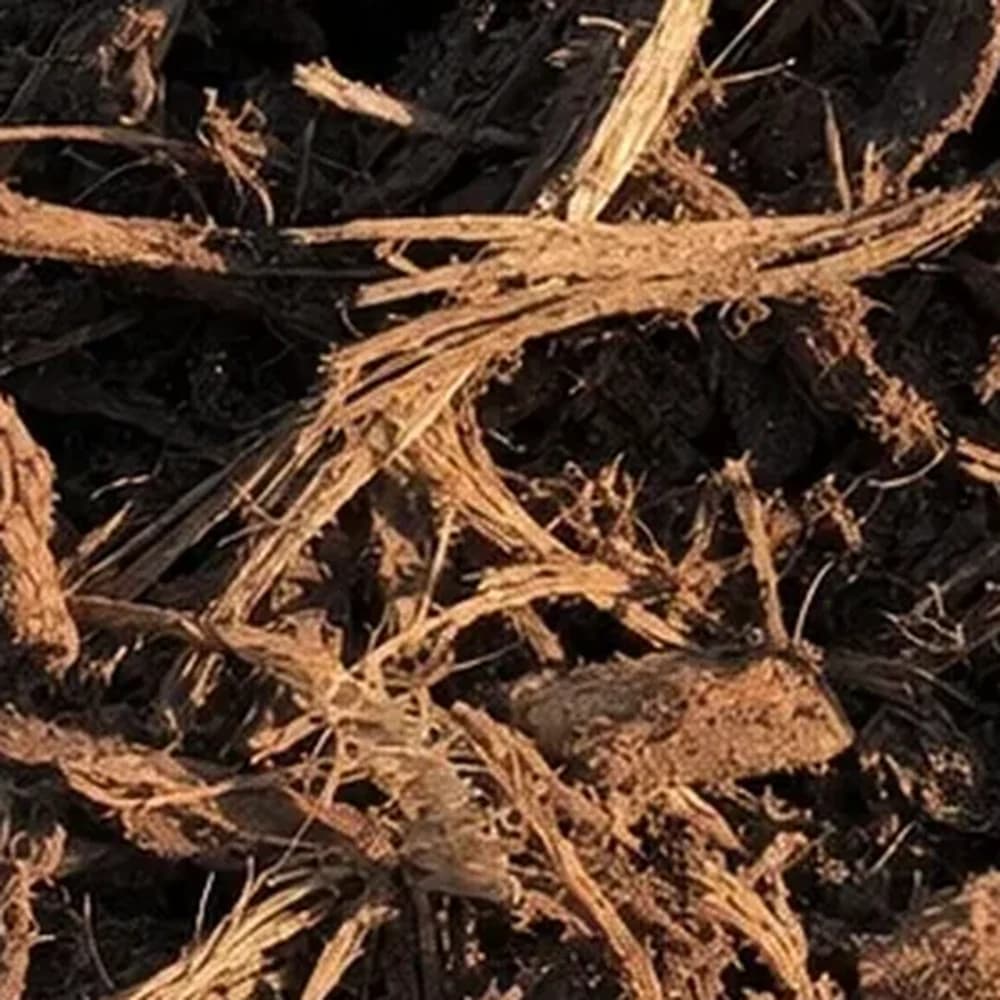
The calculator is set for shredded hardwood, which interlocks and is less likely to move on slight slopes. In a Kansas flash rain, chips and nuggets can float away or scatter, though they may remain usable for a season or two longer. Dyed mulch keeps its color but breaks down more slowly. All types use identical volume math, so product choice changes the appearance and refresh timing, not the amount ordered.
Preparing for delivery
Three yards of mulch makes a pile roughly as large as a small car. Set aside one parking space on the driveway, put down a tarp for the drop, and remember that shredded mulch can mark fresh concrete. Get it spread during the next week or two. After a month, a large pile can heat in the middle and turn sour. Plan on 30 to 45 minutes with a wheelbarrow for each yard, saving the final half-yard for those easy-to-miss beds by the garage.
Mulch questions we hear often
What number of mulch bags equals a cubic yard?
What is the cubic-foot amount in a yard of mulch?
How much mulch is required?
What area can one yard of mulch cover?
What does one yard of mulch weigh?
What is the cost of a yard of mulch?
Will mulch draw termites?
Can fresh mulch go over old mulch?
Other calculators
Leave the 27-bag cart behind.
Order bulk shredded hardwood by the yard for driveway delivery, free.